Over a decade of peer-reviewed neuroscience
Braingaze was founded on a scientific discovery, not a business idea. Everything we build is grounded in published, independently validated research.

Research Pipeline
Braingaze is driving forward a pipeline of clinical applications targeting various therapeutic areas. The Braingaze pipeline addresses the diagnosis and treatment of some of the most prevalent neurodevelopment and neurocognitive conditions both among children and adults. Our current pipeline focuses on the diagnosis and therapy of ADHD, autism spectrum disorder (ASD), dyslexia and Alzheimer's disease.
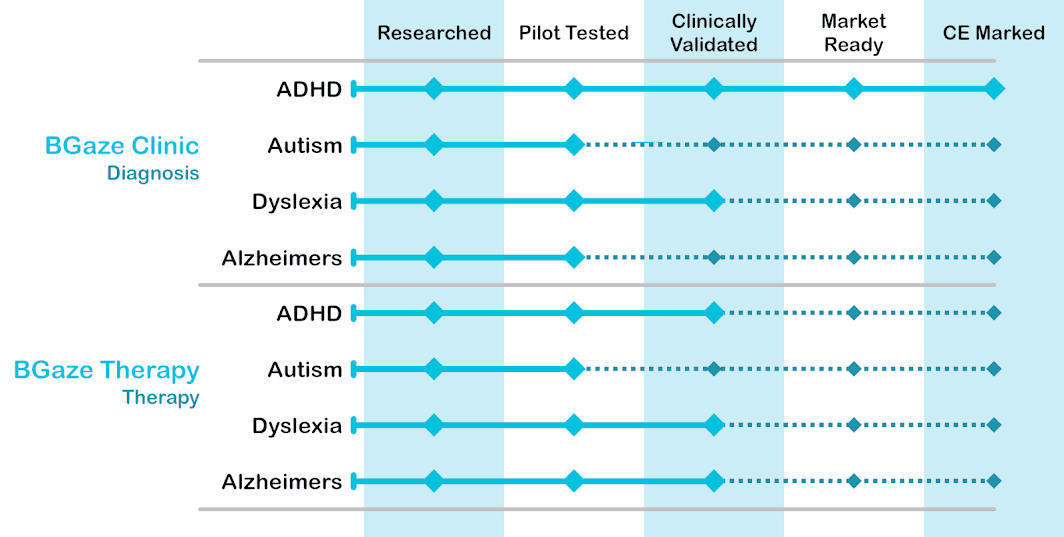
Clinical validation in collaboration with recognised leaders in the field
All our solutions are founded on peer reviewed research published in highly selective journals. We rigurously build upon this research, conducting clinical trials and validation to fairly compare with currently available alternatives in the market. We aim for objectively measureable impact - not self-reported improvements which are highly susceptible to study participant bias. The patented method underlying Braingaze's technology is based on the predictive power of small eye movements as a marker for cognitive visual processing. This eye movement biomarker, known as Cognitive Vergence, enables the fast and non-invasive diagnosis of a variety of common neurocognitive conditions.

Prof. Dr. Hans Supèr
Neurobiologist, Co-founder & CTO

Dr. José Alda
ADHD Lead, St Joan de Deu

Dr. Jordi Royo i Isach
Clinical Psychologist, Amalgama7
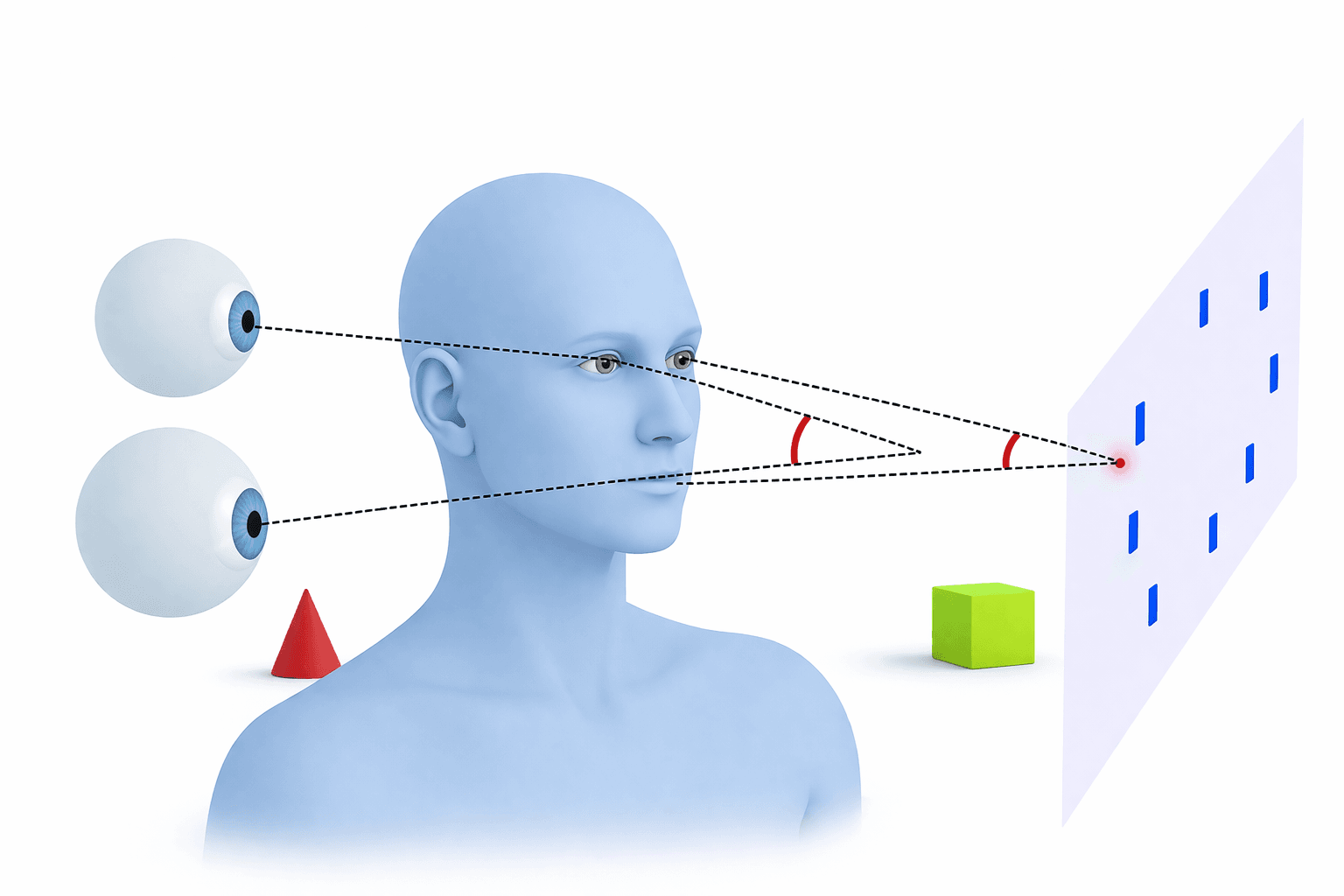
Cognitive Vergence
Vergence refers to the coordinated movement of both eyes in opposite directions to maintain clear, single vision. Braingaze research has shown that small vergence movements also happen automatically when we focus on or pay attention to something. These involuntary eye movements, termed Cognitive Vergence, are crucial for the brain to properly process what we see. In fact, research has proven that vergence can predict brain activity related to attention. Cognitive vergence, as a key part of how the brain processes information, enables Braingaze to identify attention problems in patients with neurodevelopmental and neurodegenerative conditions. Because cognitive vergence is directly tied to symptoms, measuring this physiological response provides an objective, accurate, and highly specific tool for diagnosing attention-related disorders. This makes it particularly useful in supporting clinical diagnoses of neurocognitive conditions.
Why can vergence diagnose so many neurological disorders?
A key part of how our brain processes information lies in the brainstem. The brainstem, being seated deep within the brain, has wide connections to many brain regions and uses a specific brain activity bands to control functions like attention and memory. Braingaze takes advantage of the fact that the brainstem is both influenced by, and controls eye movements.
Cognitive vergence is a biomarker directly linked to brainstem activity. As cognitive vergence worsens, it signals brainstem dysfunction, which can be an early sign of issues like Alzheimer’s and various attention disorders. Training cognitive vergence through gaze-controlled games has been shown to improve attention and working memory in patients, unlike other versions of the games that don’t provide these benefits.
Monitoring cognitive vergence provides an objective and specific method for detecting neurodevelopmental and neurodegenerative conditions early. Regular training helps patients enhance their cognitive function, reduce symptoms, and slow the progression of these diseases.
Scientific Evidence for BGaze Focus
For more than 2 decades, scientists from various parts of the world have published peer reviewed papers on how gaze controlled videogames cause substantial effects in terms of attention control, reduced impulsivity, reading abilities and working memory. Effect sizes range between 0.7 to 1.0 typically, which puts such gaze controlled games on par with what is found for non stimulant medication for ADHD or for Cognitive Behavioural Therapy. See below a list of papers we have reviewed; we are adding papers to this list on a continuous basis. BGaze Focus is currently patent pending. Below is a list of over 20 papers relating to ours and our peers work.